The Day the Dial Went Dead: A Town's 24-Hour Blackout and What It Proved
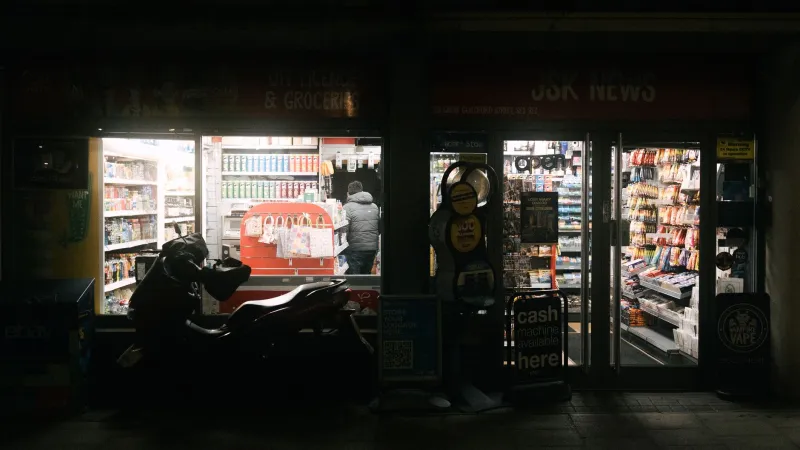
There is a particular sound a shop makes when the radio isn't on. Not silence, exactly — more the sound of everything else getting louder. The fridge. The door. A customer saying "sorry, what?" for the third time because there's nothing to fill the gap. We spent twenty-four hours in Hollins Vale listening to that sound, and it told us more about 6 Music than any petition ever has.
The idea was simple and slightly mad: ask a town to switch the station off for a day. Not because anyone thinks it's about to vanish overnight, but because absence is evidence. You don't know what a thing is doing until you take it away and watch what wobbles.
The Rules We Made Up in a Pub Back Room
Eleven of us, one function room, a whiteboard with a broken wheel. The ground rules mattered more than the stunt:
- Twenty-four hours, not a week. Long enough to notice, short enough that nobody cheats out of sheer stubbornness.
- Voluntary and unshamed. If you wanted to keep listening, you kept listening. This was never a loyalty test, and the campaign can't afford to be the sort of thing that makes people feel told off.
- A logbook, not a moan. Every participant got a sheet: what did you put on instead, what did you miss, what did you notice.
- Three households kept listening as a control group, writing down what the rest of us were missing in real time.
- One listening room at the end, because a blackout needs a punchline.
We printed 200 flyers and got laughed at in roughly the way you'd expect. Forty-one households signed up. Then the shops started asking if they could join in, which is when it stopped being a lark.
What Actually Filled the Silence
This was the finding nobody expected. Take away a station curated by humans and the town didn't get quiet — it got generic.
The bakery put on a commercial playlist and by eleven o'clock had heard the same festive-adjacent pop song three times. The hardware shop tried talk radio and lasted forty minutes before the owner's son put on a podcast about football. The taxi rank, which had eleven cars signed up, mostly drove in silence, and two drivers admitted they'd started talking to passengers more, which they'd enjoyed but also found exhausting.
"I've got adverts in my ears all day now," said one driver, idling outside the station with the meter off. "That's the trade. You swap a person choosing records for a machine choosing them, and the machine's only ever choosing for the next advert break."
By mid-afternoon the logbook was full of the same word in different handwriting: thin. The alternatives weren't bad, they were just flat — algorithmic playlists that loop, shows where the host is being talked at by a producer rather than talking to a listener.
What Got Missed (and What Nobody Saw Coming)
The control group's sheets are the interesting bit. Between them, the three listening households logged 87 separate things the rest of the town would have heard if the radios had been on. Not wall-to-wall bangers — small things. A gig announcement for a Thursday night at the arts centre. A county cricket result nobody would otherwise have caught. A session from a band that later sold four tickets to a shop assistant who'd otherwise have gone home.
But the biggest category wasn't music at all. It was company.
"I do the early shift," said one of the drivers. "Four in the morning, town's empty, and the only other human being awake and talking to me is whoever's on at that hour. On Tuesday I had nothing. Just me and the engine."
That's the argument in one sentence. It's not a library of records, or a playlist, or a marketing proposition. It's a shared reference point in a country that keeps quietly privatising its own company.
The Ledger
The venue staff were the most blunt. The Swan's bar manager reckoned they'd lost a handful of Tuesday-night ticket sales because the band had played a session that morning and nobody in town had heard it. The record shop sold out of one LP on Wednesday simply because three separate people had heard the same track on the blackout-eve show and come in asking.
Small numbers. Real money. Nobody in a spreadsheet at a broadcasting HQ ever sees them, and yet they're the whole argument.
The Awkward Findings
A blackout isn't automatically clever, and we'd rather you heard the problems from us than discovered them in your own town:
- A stunt can read as a sulk. The framing has to be curiosity, not punishment. "We want to know what we'd lose" works. "We're all leaving until you behave" doesn't.
- It doesn't move decision-makers on its own. Nobody at the top of the BBC is going to change a policy because Hollins Vale had a quiet Saturday. What it does do is give you a story for your MP, your local paper and your WhatsApp groups that isn't just "please don't close it".
- Don't overdo it. A week would have bred resentment. Twenty-four hours got people talking about what they missed rather than resenting the campaign.
- Protect the isolated listeners. The people who rely on the station most are often alone. Ring them. Invite them to the listening room. Never leave someone in a manufactured silence without a check-in.
How to Run Yours Without Being a Nuisance
If you're thinking of organising one before the year's out, here's the version that works:
- Base it on shops and vehicles, not households. Households are flaky. A shop has a routine it notices losing.
- Give everyone the same one-page logbook. Three questions only: what did you put on, what did you miss, what did you notice.
- Find your control listeners early. Three people who keep listening and note what others would have heard. It's the magic ingredient.
- Invite your MP to the last hour — the listening room, not the silence. Ask them to bring one record that got them through something.
- Photograph and quote with permission, and don't make anyone feel daft for forgetting and tuning in.
- End together. A pub back room, everyone brings one track, in order, no shuffling. It's the bit people will talk about.
The Last Hour
The listening room was a back room at the arts centre with bad chairs and good speakers. Twenty-odd people, a stack of request slips, and a running order sorted by somebody's eleven-year-old. Nobody said anything profound. We played a folk thing, a dub record, a guitar band from Sheffield, a record that got played on the station before the band had even played a gig. Somebody's nan danced. Somebody's grandson recorded the whole thing for her.
When the logbook went in the envelope and the first track came back on, the sound of the room was exactly what we'd been trying to describe all day: not music, not silence, but people being in the same place at the same time, and choosing it.
That's the campaign. Not "you can't take it away", but "we noticed what happened when we did, and we wrote it down."
If you run one, send it to us. We'll help you make a proper din with it.