The Chairs Between Appointments: Why 6 Music Is a Public Good in Life’s Waiting Rooms
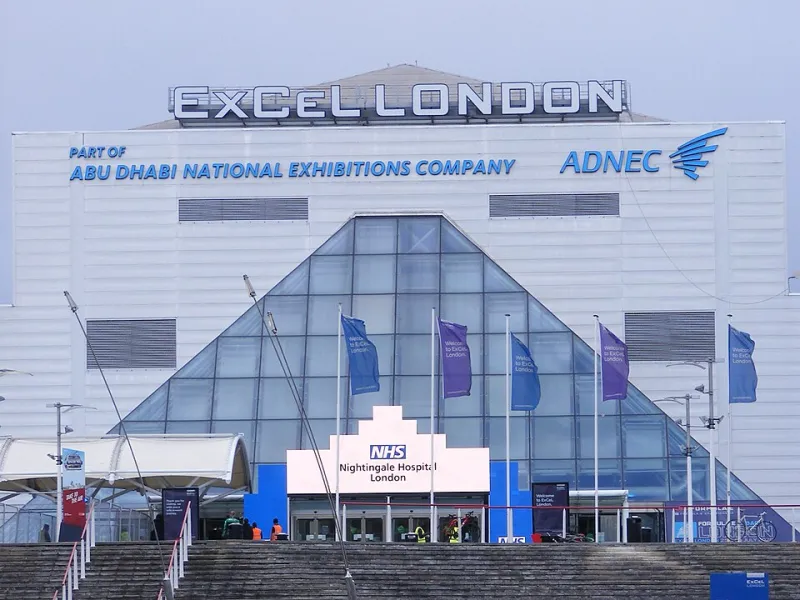
Photo: Sludge G, CC BY-SA 2.0, via Wikimedia Commons
On a wet Tuesday morning in a clinic in Salford, the loudest thing in the room is the radio. Not a TV, not a receptionist, not the hand dryer. Just a station coming out of a ceiling speaker while a row of people stare at their phones, their shoes, or the digital sign that says the consultant is running twenty minutes late. A listener wrote to Save 6 Music about this recently. They did not remember which track was playing. They remembered that it was not adverts, not a phone-in, not the same four songs that follow you around every supermarket. It was just music, chosen by a person, in a place nobody would ever call a venue.
That is the waiting room frequency. It is not glamorous. It does not get written up in the style pages. But it might be the clearest evidence we have that 6 Music is a public good rather than a private habit for people with nice headphones and a spare hour.
The unglamorous hours
Campaigns love a stage. A gig poster, a packed room, a presenter with a microphone and a crowd who know the words. All of that matters. But most of the listening life of this country happens in the in-between places: the chair by the blood-test cubicle, the garage forecourt while the MOT is being done, the corridor outside a Jobcentre appointment, the launderette where the tumble dryers eat your pound coins and your afternoon.
These places are not designed for culture. They are designed for waiting. And waiting is where radio still does something no playlist quite manages. It shares a room. It gives strangers a common texture without asking them to talk. It fills a silence that could otherwise turn into anxiety, boredom, or the low-grade dread of a screen telling you that your number is still not up.
6 Music has been broadcasting since 2002, but its real history is written in these smaller rooms. A listener in Leicester told us about hearing the station in an MOT bay while the mechanic explained that the brake pads were going to cost more than the car. A nurse in Swansea described a day unit where the radio is left on low and nobody complains because it is the one thing in the room that is not treating anyone like a patient. A student in Glasgow mentioned a launderette where the owner keeps 6 Music on because 'the adverts make people anxious.'
You can take those as anecdotes. The campaign takes them as evidence.
What the chairs hear
The strongest listener stories are rarely about favourite songs. They are about atmosphere. A dental waiting room in Norwich. A council office queue in Sheffield. A community centre in Stoke where the coffee morning is really a support group with biscuits. A hospital transport minibus. A food bank in Cardiff where the volunteers put the radio on between deliveries because silence makes a hard room harder.
One listener described sitting in a Jobcentre corridor after a redundancy and hearing a track they would never have found themselves. They said it did not fix anything. It just made the room feel less like a verdict. Another told us about a garage forecourt in Leeds where the radio is piped outside, so you get a strange, accidental broadcast to everyone filling up their cars. Nobody is there for the music. Everybody is there for something else. And yet the music is doing public work: it is lowering the temperature, filling the gap, making a shared space feel less like a queue and more like a place.
This is not a niche habit. A niche habit is something you do alone, on purpose, with a subscription and a pair of noise-cancelling headphones. What these stories describe is closer to a public service: something that arrives in the room whether or not you would have chosen it, and makes the room better for people who could not afford to choose anything at all.
The public-good argument nobody puts on a poster
The licence fee row tends to get stuck on big numbers and bigger egos. Is the BBC too big? Too small? Too London? Too cautious? Too expensive? Those are fair debates. But they can miss the simplest argument for 6 Music: it is one of the few national music services that still behaves as if the country is full of people who are not all the same age, not all in the same mood, and not all able to pay for a curated escape.
In a waiting room, that matters. Commercial radio can be brilliant, but it is built to sell. Streaming is built to personalise. 6 Music is built to introduce. It assumes you can handle something you did not ask for. That is a radical idea in 2026, when so much of our culture is designed to give us more of what we already like. The station’s presenters are not just filling slots between records; they are making a case that taste is a conversation, not a transaction.
And because it is carried in public places, it reaches people who may never download a BBC Sounds app, never post about a session, never buy a gig ticket. The campaign is often accused of being a middle-class lobby. The waiting room says otherwise. The waiting room is a cross-section: retired people, shift workers, parents with buggies, teenagers with earache, people who have just lost a job, people who have just been given news they did not want. They are not a demographic. They are the public.
The silence test
Imagine the same rooms with the radio off. Not because anyone decided silence was better, but because the station was no longer there to put on. What fills the gap? Often, adverts. Often, a commercial playlist with a sponsor tag. Often, nothing at all, which is worse. The point is not that 6 Music is the only good thing that can come out of a speaker. The point is that a public service should be judged by what it does in the places where nobody is clapping.
This is where the campaign gets its energy. Not from nostalgia, and not from a defence of the BBC as an institution with a nice logo. From the ordinary evidence of ordinary rooms. A station that can hold a hospital corridor, a garage forecourt, and a Jobcentre queue is not a luxury. It is infrastructure. It is the cultural equivalent of a streetlight: not exciting, not profitable, but try removing it and see how quickly the street feels different.
Make the in-between places count
If you have heard 6 Music somewhere you were not expecting it, tell us. The campaign is collecting these stories because they are harder to dismiss than a petition alone. They show the station living outside the bubble of people who already love it.
You can also ask the places you wait in. The surgery, the garage, the community centre, the launderette, the staff room, the volunteer hub. Not every space can choose its own soundtrack, and not every manager will say yes. But the question is worth asking. A small sign saying 'we play 6 Music' is a tiny act of cultural maintenance. A letter to your MP about the licence fee is a bigger one. A story about a waiting room that feels less lonely because of a radio station is the kind of thing that makes a campaign feel like a country, not a clique.
Save 6 Music exists to keep alternative radio loud, live and on air. That means defending the stage, yes. But it also means defending the chairs between appointments, the forecourts, the corridors, and all the unglamorous rooms where a public good is quietly doing its job.