The Lathe and the Playlist: How a Single 6 Music Spin Becomes a Repress
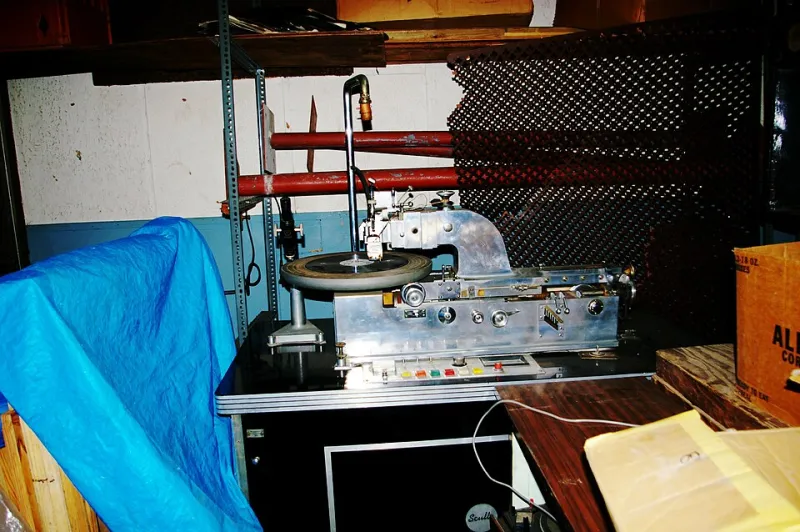
Photo: Christina Xu, CC BY-SA 2.0, via Wikimedia Commons
There's a plant on the edge of an industrial estate that smells of warm PVC and coffee. It runs two presses, a lacquer cutter, and a queue of orders that stretches six months out. The people who work there don't listen to radio much — they listen to test pressings. But they know 6 Music's name, because it shows up in their order book.
"We can usually tell when something's had a play," says one production manager, who's been in the trade for over a decade. "A label rings up and asks if there's any chance of moving a repress forward. Two months ago they weren't sure they could sell 300. Now they want 800."
The phone call a plant wants
Vinyl manufacturing is a slow, physical, deeply unglamorous business. Cutting a lacquer takes time. Plating takes time. Pressing takes time, and the margins are thin enough that a plant can't afford to be wrong about demand. So when a label suddenly wants a repress, it's not because of a marketing dashboard. It's because something happened to make people want the record.
And in the UK, at this scale, that something is very often radio — specifically, a station willing to play an album track by a band on a small label at half nine in the morning.
"Commercial radio doesn't do that," the production manager says, flatly. "They play what's already selling. That's fine, that's their job. But you don't get a repress out of a playlist addition. You get one because a human being decided this song was good and told a few hundred thousand people about it."
Why a spin isn't just a spin
The ripple runs roughly like this. A track gets played. Somebody Shazams it in a kitchen in Sheffield. Somebody else hears it in a van and orders the album on the way home. Streaming goes up — streaming always goes up — but so do the direct sales, the Bandcamp orders, the limited-run coloured vinyl that a small label put out as a maybe.
Those orders are the ones that matter to a plant. A streaming play pays fractions of a penny. A repress is a purchase order, a shift, a bit of overtime, a reason not to sell the second press.
"People talk about the music economy like it's just artists and venues," says one small-label owner who's pressed three runs in the last eighteen months. "It's also the platers, the printers doing the sleeves, the couriers, the shops. A single national play can move the needle across all of that. Not massively. But enough."
The small-run problem
Here's the awkward bit: the market has been quietly making small runs harder. Pressing plants have consolidated. Minimum order quantities have crept up. A band that wants 250 copies on a Tuesday can find themselves pushed toward a thousand or told to come back next year.
Which is precisely why an unexpected demand signal is worth so much. It doesn't just sell records — it justifies the run. It turns a speculative pressing into a scheduled one. It's the difference between a plant saying yes and a plant saying not this year.
That's not a sentimental argument about the romance of vinyl. It's a supply-chain argument about a manufacturing base that's already thinner than most people realise.
Demand generator, not decoration
We should be careful about overclaiming. 6 Music doesn't keep every plant in Britain alive — nobody suggests that. But when you add up the spins across a year, the sessions, the album of the day features, the late-night records a presenter plays because they love them, you're looking at something closer to an industrial subsidy than a broadcast.
A public subsidy paid in attention, delivered free, and never once invoiced.
"It's the only plug we've got," the label owner says. "I'm not being dramatic. I'm saying: if that goes, the arithmetic changes. Some records don't get pressed. It's that simple."
What happens if the signal goes
The campaign's case has always been cultural. It should also be economic — not because culture needs a spreadsheet to justify itself, but because the people making decisions respond to spreadsheets. Every spin is a lead. Every lead is a sale. Every sale keeps a press turning and a lacquer cutter in work.
So make that visible. If a 6 Music play sent you to a record shop this year, tell the label. Tell the band. Tell your MP. Post the receipt, not just the opinion.
The argument isn't that 6 Music is nice to have. The argument is that it's part of the machinery — and machinery that's still working is worth a damn sight more than machinery we let seize up.
Keep it loud. Keep it live. And keep buying the records.