The Space Between the Songs: Why 6 Music's Station Sound Is Worth Fighting For
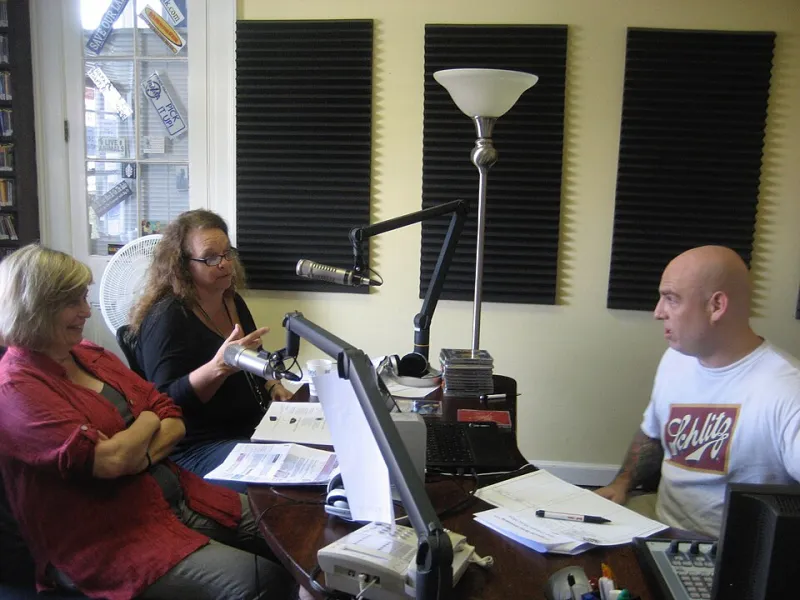
Photo: Infrogmation of New Orleans, CC BY-SA 4.0, via Wikimedia Commons
You know the feeling before you know the record
A track fades. There is a half-second of silence, then a voice, a stinger, a bed of sound that lasts long enough to tell you where you are. You have not looked at a screen. You have not checked a schedule. You just know: this is 6 Music.
Station sound is the name for that craft. Idents, jingles, sweepers, stings, beds — the sonic furniture between the songs. It is the bit that gets skipped when people talk about radio in terms of playlists and presenters. It is also the bit that makes a station feel like itself rather than a shuffled queue with a logo attached.
In a campaign year, when the future of alternative radio is being argued over in funding conversations, it is worth paying attention to the small stuff. Because protecting 6 Music means protecting the texture between the records, not just the records themselves.
What station sound actually does
A sweeper is short. A sting is shorter. An ident might be three words and a guitar chord. But each one is doing several jobs at once: signposting the station, managing the mood, covering a transition, and giving the listener a sense of place.
'You are basically writing a haiku with a deadline,' says Ruth, a freelance radio producer in Manchester who has made station sound for alternative and speech stations. 'A good sweeper does not sell. It signals. It says: you are still here, we are still here, and here is what is coming next.'
On 6 Music, the signal has historically been warm, dry, slightly irreverent and deeply musical. The beds are often built from real instruments. The voices are not polished into a commercial sheen. There is room for a joke, a pause, a handover that sounds like two people who actually like each other. The station sound is not a wall between the music and the listener. It is the mortar.
The art of the seven-second sweep
Ruth talks about the 'texture test'. Listen to a station with your eyes closed for five minutes. Can you tell where you are before a presenter speaks? If the answer is yes, the station sound is working.
'When budgets tighten, station sound is one of the first things people look at,' she says. 'It looks like non-essential. It looks like decoration. But it is actually continuity. It is the thing that makes a playlist feel curated rather than generated.'
That is the campaign argument in miniature. Alternative radio is not just a set of songs that do not fit a commercial format. It is a whole listening environment — a tone of voice, a sense of humour, a way of moving from a difficult track to a silly link without whiplash. Strip out the between-bits and you do not get a purer music service. You get a shuffle with a BBC logo.
A voice in the room
Marcus is a voice artist based in London who has read idents for stations across the dial. He says the difference between a commercial read and an alternative radio read is trust.
'You are not announcing,' he says. 'You are welcoming. The listener has chosen to be there. You do not have to grab them by the lapels. You just have to sound like a person they would not mind sharing a lift with.'
Listeners notice. Priya, 29, from Glasgow, says the idents feel like 'a friend clearing their throat before saying something brilliant'. She cannot quote them word for word. She does not need to. The feeling is the point.
Another listener, Tom, 38, from Sheffield, says he can recognise 6 Music from the next room. 'It's the way the links sit against the music,' he says. 'It's not just the songs. It's the space between them. It feels handmade.'
Why this is a campaign issue
Public service broadcasting is often defended in terms of range and reach. Both matter. But there is another value that is harder to put in a report: distinctiveness. Not just what you play, but how you hold the listener's attention while you play it.
When a station loses its station sound, it loses part of its memory. The little stings and sweeps are how a listener learns the rhythm of a place. They are how a station says 'we are still here' without saying it. In a media landscape of infinite shuffle, that rhythm is a public good.
So the Save 6 Music argument is not only about keeping presenters in jobs or keeping specialist shows on air, vital as those things are. It is about keeping the weird little bits — the handover, the bed, the voice that sounds like it is speaking to one person rather than a demographic.
Take the texture test
Next time you listen, try it. Eyes closed. Wait for the gap between songs. Notice what happens. Is there a person there? Is there a mood? Is there a station?
If the answer is yes, that is what we are fighting for. Not just the records. The space between them.