Mud, Signal and Shared Screens: Why a Festival Field Needs 6 Music in the Room
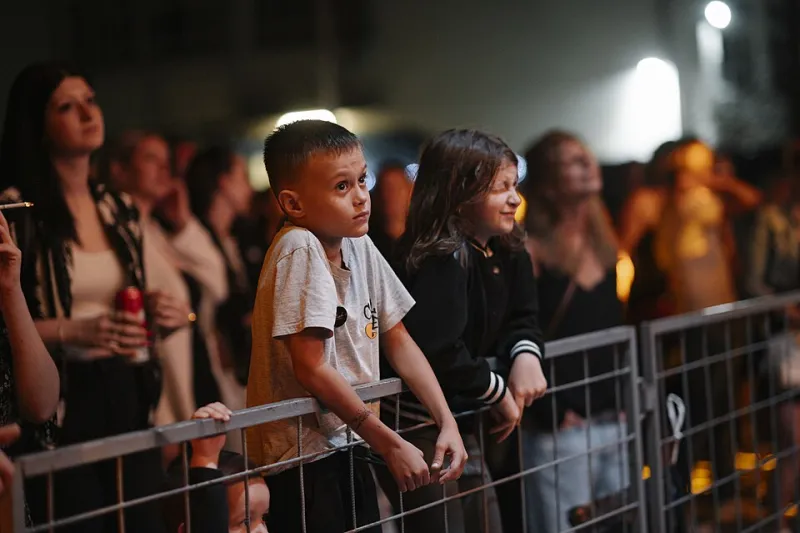
Photo: Shixart1985, CC BY 2.0, via Wikimedia Commons
There's a particular kind of joy in watching a festival set you didn't attend. Not the highlights reel, not the clip that goes viral because someone's flag fell over — the whole thing, start to finish, with a presenter who actually knows the band's name and can tell you which record the third song came from. That's the 6 Music version. It's also the version most of us can actually get to.
The set you didn't get a ticket for
Glastonbury sells out before most of us have thought about whether we can afford the coach. Green Man, End of the Road, Latitude, the small city festivals that 6 Music has spent years championing — the tickets go, the fields fill, and the rest of the country watches the coverage or reads the reviews.
But here's what the station does that a streaming algorithm won't: it stays with the set. It broadcasts the band at 2pm on the Woodland Stage with four hundred people watching, the same care it gives the Sunday night headliner. Somebody decided that set mattered. Somebody put a producer, a sound engineer and a presenter on it. That decision — unglamorous, expensive, entirely uncommercial — is the whole point.
"I found my favourite band through a festival broadcast at eleven in the morning," one listener told us. "I was doing the washing up. They were on a stage in a field in Wales. It's not a thing a playlist would have done for me, because a playlist doesn't know where the interesting stuff is happening at 11am on a Saturday."
What the cameras miss
Festival coverage on television tends to do one thing well: the big moment. The crowd shot, the chorus, the fireworks. Fair enough. But 6 Music's festival output is structured differently. It's built around context — who the band are, where they've come from, what it means that they're playing a tent with a leaky roof at 3pm.
That matters for emerging acts more than anyone. A slot on a small festival stage is a break. A slot on a small festival stage with national radio committed to covering it is a genuine leg-up. It's the difference between playing to the people who happened to be near the cider tent and playing to a country that's half-listening while it makes dinner.
That's not a ratings play. It's a public service with wellies on.
The licence fee argument, played out loud
The campaign to protect 6 Music has always leaned on a simple idea: this station does things that the market won't, because the market has no reason to. Festival coverage is that argument in three dimensions. Commercial radio will cover Glastonbury. It will not spend an afternoon on a 250-capacity stage at Green Man because a producer heard something in a demo six months ago and thinks you should hear it too.
Public service broadcasting isn't only about news and emergencies. It's also about the infrastructure of taste — the unglamorous scaffolding that lets a scene develop in public rather than in a private group chat. When you fund that, you're not paying for a radio station. You're paying for a pipeline.
The flagpole test
I've started using what I call the flagpole test. Next time you watch festival coverage, count the flags. Each one is a person who dragged a pole across a car park at 7am because they wanted to be identified with something. People don't do that for a playlist.
And this is the part that should worry anyone who thinks 6 Music is a nice-to-have: the shared national moment is getting rarer. Live television is fragmented. Social feeds are siloed. The number of places where a few hundred thousand people are all hearing the same song at the same time, chosen by a human being who thought you might like it, is shrinking fast.
Festival coverage is one of the last ones standing. It gives a small act a national audience and gives the rest of us a reason to look up from our phones on a Sunday evening in June.
What we're asking for
Not a bigger budget. Not a rebrand. Just the recognition that this stuff doesn't survive on goodwill. The BBC's decisions about what to keep and what to cut are made against spreadsheets, and festival coverage of emerging artists will always look like a cost line rather than a public good until people say otherwise.
So say otherwise. Write to your MP. Sign the petition. Send the station a note telling them which festival set changed your year — they read more of them than you'd think. And next summer, when a band you've never heard of is playing to a few hundred people in a field somewhere, watch what happens next.
That's the moment the argument wins itself. We just have to keep the signal on long enough for it to happen.